Skip navigation.
Home

Languages

RSS Feed FromDual on Linked In Recommend us on Xing Join us on Facebook Google+ Flickr Contact us

Backup

Recover lost .frm files for InnoDB tables

Recently I found in a forum the following request for help:

To zip, or not to zip, that is the question

Abstract: In this article we have a look at the compression options of common zipping tools and its impact on the size of the compressed files and the compression time. Further we look at the new parallel zip tools which make use of several cores.

MySQL Restore and Recovery methods

Backup is for sissies! Let's have a look what we can do when we are not a sissy...

First of all: Your life is much easier when you have a proper backup process implemented and verified the restore procedure of your MySQL database.

But what if you have no backup in place and did a DROP TABLE. What shall we do?

We assume our data we just dropped are located on the following device:

# export IMAGE=/dev/hda1

First of all, power off your server. This avoids that the operating system writes data down to disk and overwrites your table you just dropped.

DBA wisdoms

Controlling developers is like herding cats.
Kevin Loney, Oracle DBA Handbook

Oh no, it's not. It's much harder than that!
Bruce Pihlamae, long-term Oracle DBA


Do not assume!
Unknown IT specialist


Backups ist was für Warmduscher!
(engl. Backup is for sissies!)
Unkown DBA


Yesterday (the DBA version)

Can you trust your backup?

Today a customer with corrupted data files showed up. When we enquired a bit more he told us that he had a broken I/O controller. This is one of the worst things which can happen to you!

The reason is the following: When a I/O controller starts to die it often does not happen immediately. The controller dies slowly producing more and more corrupt data. When you just write data without checking or reading them it can take days or even weeks until you discover the problem.

But the nasty thing is, that even your backup is infected with the corrupted data.

MySQL Cluster restore

Recently the question came up if it is faster to restore a MySQL cluster when all nodes are up or only ONE node from each node group during restore.

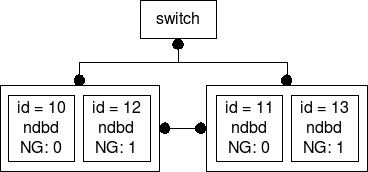
The answer from our gurus was: All nodes up during restore! I wanted to find out why. So I set up the following cluster and started to measure:

MySQL Cluster set up

Cluster set-up

MySQL Cluster backup

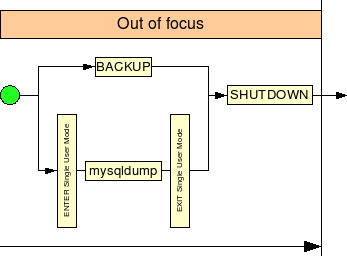
The backup is not that interesting. But I made the drawing for possible future use :-) :

Syndicate content